Pages

Friday, 22 February 2013

Tips For Healthy Skin Care


Tips For Healthy Skin Care

A healthy skin is sign of good and active body and skin care is important in order to live a healthy life. Also, skin is the biggest organ of the human body and one of the first defenses we have against external elements, diseases and other ailments.

Having a skin disease can prove to be a big problem as it involves a lot of care, medication and prevention from foods as well as outside environment.  There are also many diseases that can originate from skin if it is not taken care of properly. Thus, it is imperative to take good care of skin to keep it healthy and clean.

This article brings a few tips on healthy skin care and how we can best take good care of our skin to ensure an impressive personality and good health.

Overexposure to sun can be very bad for skin. The first tip for healthy skin care is to avoid exposure to sun in its peak hours as it can cause cancer. Different rays of the sun can lead to over production of melanin that can encourage growth of moles and other growths. People who regularly go out in the skin should wear complete clothing and also apply sun screen to avoid skin problems that result from over exposure to the UVA and UVB rays. The best thing to do in this regard is to stay away from sun from 10 in the morning to 3 in the afternoon as during these times the rays are strongest. 

It is important to keep the skin hydrated to avoid dehydration and dryness of the skin. If the skin remains dehydrated and dry for long periods, it can result in premature aging and wrinkles which looks very bad and damages the skin too. Drinking plenty of water is important to keep the skin hydrated and supple.

Regular consumption of cigarettes and alcohol is very bad for skin health. Our skin is a living organ and breathes and takes in the good nutrients just like other parts of the body. Thus, harmful agents like smoke and alcohol are very bad. Smoking causes the blood vessels to shrinks that hampers the blood supply in the body and once this process is affected, it can lessen the healthy glow of the skin and make it look shriveled and unhealthy. 

Good skin results from healthy diet and good food. Plenty of water and juices, vegetables and fruits and lean meats are very good for a healthy and glowing skin which leads to an attractive personality. Avoiding harmful agents like sunlight and unwanted laser treatments as well as a lack of water can seriously harm the skin. The above mentioned tips for healthy skin care will help you get a glowing skin and attractive personality. 

How To Take Care Of Your Skin


How to take care of your skin (and save on some housework)


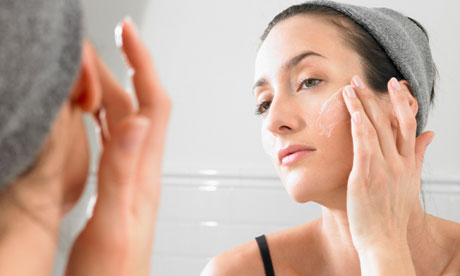
Let's give the Botox and fillers a rest, and concentrate on simply looking after our faces – and, as a bonus, you'll leave fewer skin cells around the house


When I was growing up I wish someone had explained cleaning to me. If I'd known how much of my adult life would be occupied with it I'd at least like to have been warned. If I'd expected cleaning I might have paid more attention to Miss Houghton in domestic science (double-period, Friday afternoons). I don't know what my mum thought I was going to do when I left home – I have vague memories of being shown a Ewbank carpet sweeper and of being ticked off for saying "Hoover" instead of "vacuum cleaner" ("it's a brand, darling"); there was an occasional foray into Brasso and polishing things, and sometimes I washed up but that was about it. When mum became ill my dad and I learned about the twin-tub together, until I fed my fingers through the wringer one morning. Either way, it was hardly a comprehensive grounding in the vexing nature of keeping things shipshape and Bristol fashion.

I like things to be clean but I don't much enjoy the process – and disappointingly once it's been done you have to do it again and again and again. It's never-ending. Everything needs cleaning: bathrooms, clothes, teeth, ourselves … when our children are small we have to clean them too. It's no life, is it? At least when I was a young mum there were reasonable excuses for not doing it – many a time I spritzed a radiator with furniture polish (it smells like you've made the effort even when appearances are very much to the contrary). I had to learn as I went along. The sticky tape/lily pollen trick is wonderful for impressing an audience ("It's a miracle! I thought my suit was a goner!), whereas the freezer/chewing gum and the candle wax/hot iron are good but less like actual magic. And everyone knows about salt on white wine and soda water on red wine. Underneath it all, though, there is a basic truth – that it is important to take good care of clothes, shoes and yourself by maintaining all three in decent order, and the older you get the more important it becomes: a stitch in time keeps the bag lady away, or something …

However, it is possible to go too far. I love to see a crisp, pressed collar but I do not love to see a crisp, pressed face hovering above it. Can we please give the Botox and fillers a rest and concentrate on good skin? My Auntie Jean sometimes looked as though she'd been breadcrumbed, so thick was her maquillage (I'm sure she slept in it), but we don't have to put up with such nonsense now that make-up is so light and we've been enlightened about exfoliating. Skin that is regularly and properly cleaned seldom looks clogged, tired and dull. It looks fresher and less old too. You might swear by Chantecaille's Nano Gold Energising Cream at an eye-watering £370 a pop but there's little point in slapping on any kind of body lotion or miracle cream, no matter how expensive, if it's just going to sit there on top of a layer of dead skin. My Nan – wonderful skin at 80 – was a great believer in a good rub with a rough flannel and what was that, if not exfoliating?

Try thinking of your face as a cashmere jumper that needs de-bobbling – looked after well, your cashmere looks fabulous but smothered in bobbles it looks like the stuff you empty out of the Hoover (sorry mum). My favourites for the face are either Liz Earle's Cleanse & Polish Hot Cloth Cleanser or Eve Lom's Balm Cleanser which work on Nan's hot-cloth principle. For all-over exfoliating I'd recommend a gentle going over with the Body Shop's exfoliator/skin buffer thingy which is wonderful on elbows and knees, then follow it up with a slathering in the body lotion of your choice.

Here's a final thought – the average human body can shed up to 50,000 dead skin cells every minute of every day. And where does all that skin go? Well, it's in the fuzzy stuff you find lying on top of your face or your sideboard so it's not a big stretch to think that by washing your dead cells down the plug hole you're actually saving yourself time on the dusting. Genius!

Friday, 8 February 2013

What Is Healthcare


What Is Healthcare?


What Is Healthcare?
What Is Healthcare
According to the Health Insurance Portability and Accountability Act or HIPAA healthcare is broadly defined and includes any care, service, or supply related to the mental or physical health of an individual. It is also defined as the treatment, management and prevention of illness and the preservation of the physical and mental well being of a person with the help of medical and allied health professionals.
The goals for a healthcare system, according to the World Health Organization are to ensure the good health and respond to the expectations of the population as well as fair financial contribution from the people and the government. Implementation and progress of healthcare depend on the provision of healthcare services, generation of resources, proper financing and correct stewardship.
There are many policies that the government has instituted with regard to healthcare. These include rules, regulations and guidelines for the proper operation and financing of delivering healthcare to everyone. Not to mention that healthcare covers a very wide range of services including public health, mental health, long-term care, chronic illness and disability and preventive healthcare.
In the United States, different and separate legal groups provide healthcare. Although there are public healthcare facilities, there are more facilities that are owned and operated by private entities. Medicare, Medicaid, Tricare, Veterans Health Administration and Children’s Health Insurance Program are sponsored by the government but health insurance is still primarily provided by the private sector. Healthcare is basically financed through private insurance companies, which is usually accessed by individuals through employment.
Healthcare providers are individuals and institutions. Individuals are healthcare professionals and members of the allied health professions such as doctors, nurses, midwives, dentists, optometrists, therapists, laboratory technicians, psychologists, chiropractors, pharmacists and community health workers.
The healthcare system is largely funded by the taxes paid to the state, the county or to a municipality. Funds can also come from social health insurance, from voluntary or private health insurance, from out-of-pocket payments made by individuals and groups and from donations.
Healthcare reforms in the United States have been enacted nationally in 2010 by two bills – the Patient Protection and Affordable Care Act that became a law on March 23, 2010 and was amended by the Health Care and Education Reconciliation Act of 2010 which became a law seven days after, on March 30.  The reforms include expanded coverage of Medicaid eligibility to people belonging to the federal poverty level, guaranteed issue and community rating that will prohibit insurers from denying insurance coverage to sicker applicants or imposing special conditions such as high premiums and higher cost sharing. This will be implemented in 2014. These are just two of the many reform drivers included in the healthcare reform act.


credit: http://whatishealthcare.org/